The Leon County Circuit Court is a major trial court that handles serious legal cases and high-level disputes. It plays a central role in the court structure by managing cases that require strong legal authority and detailed review. The leon county circuit court operates as part of the Florida judicial system and serves as a core level in the trial court system. It hears major civil disputes, felony criminal cases, and family law matters that go beyond lower courts. Judges in this court review evidence, listen to arguments, and issue binding decisions that impact rights and property. The court structure gives it wide legal authority, which allows it to handle complex proceedings. This makes it a key part of maintaining order and fairness within the local legal system for residents and legal professionals alike.
The leon county circuit court supports transparency by maintaining open public case records for review. These records include filings, case status updates, hearing schedules, and final judgments. This level of openness helps people stay informed about ongoing legal matters and builds trust in the judicial process. The court also ensures that legal procedures follow established rules within the Florida judicial system. Its role connects courtroom decisions with public record systems, making information available when needed. Through its authority and record-keeping, the court strengthens accountability and supports a clear, reliable legal process for the community it serves.
What is the Leon County Circuit Court?
The circuit court in Florida’s judicial system that handles serious legal matters and complex disputes is the leon county court FL. It operates under the structure of Florida circuit courts and has broad judicial authority over civil and criminal cases. This court deals with matters that require formal trials, detailed evidence review, and legal interpretation. It stands above county courts in the court hierarchy and plays a key role in resolving disputes that involve significant legal consequences for individuals, businesses, and government-related matters across Leon County and surrounding areas in Florida.
Role in Florida’s Court
The circuit court leon county fl plays a central role in Florida’s judicial framework by handling cases that require full trial procedures and higher legal review. It connects lower county courts with appellate courts and manages a wide range of serious legal issues. This court supports the overall structure of circuit courts Florida by ensuring fair hearings, proper legal process, and consistent application of state laws. Judges in this court evaluate evidence, hear arguments, and issue decisions that directly impact legal rights and responsibilities.
- Handles felony criminal trials
- Manages large civil disputes
- Oversees family law matters like divorce
- Reviews probate and juvenile cases
- Hears appeals from county courts
Level of Authority and Jurisdiction
The circuit court leon county fl holds a high court jurisdiction level and has strong judicial authority over major legal matters. It can hear cases that involve serious criminal charges, high-value civil disputes, and complex legal issues that require detailed examination. Its authority allows it to conduct jury trials, issue binding rulings, and interpret Florida laws in significant cases. This level of jurisdiction makes it one of the most powerful trial courts in the Florida judicial system.
- Felony criminal cases
- Civil cases with high financial value
- Family law disputes including custody
- Probate and estate matters
- Juvenile dependency cases
Difference Between Circuit Court and County Court
The circuit court leon county fl differs from county court mainly in authority, case type, and jurisdiction level. Circuit courts handle more serious and complex cases, while county courts focus on minor legal matters and lower-value disputes. This separation helps organize Florida’s court system and ensures cases are assigned to the correct judicial level based on seriousness and legal complexity.
- Circuit court handles felonies; county court handles misdemeanors
- Circuit court manages high-value civil cases; county court handles small claims
- Circuit court has broader jurisdiction; county court has limited authority
- Circuit court hears family and probate cases; county court handles minor disputes
- Circuit court conducts jury trials more often than county court
How to Search Leon County Circuit Court Records
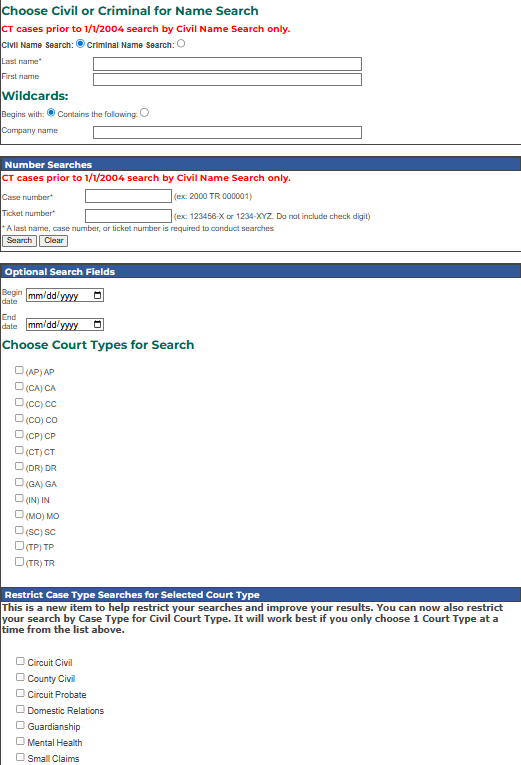
The leon county circuit court records search system allows users to view case details, filings, and hearing updates through an official public database. This system functions as a case lookup and court case finder within circuit court leon county fl and operates under Florida circuit courts. It supports public records search for civil, criminal, family, and probate matters. The tool is designed for simple navigation so users can quickly find case information using names, numbers, or citations through an official online database.
Official website: https://cvweb.leonclerk.com/public/index.html
Proccess to Search
- Open the Leon County Clerk case search Official website: https://cvweb.leonclerk.com/public/index.html
- Find and open the case search tool on the homepage.
- Select a search method based on available details:
- Case number search
- Party name search
- Citation search
- Enter correct case information with proper spelling and accurate numbers.
- Review search results and select the correct case from the list.
- Open the case to view full details like status, filings, and court dates.
Jurisdiction and Legal Authority of the Circuit Court
The court jurisdiction level defines the scope of authority the circuit court holds within Florida’s legal system. It determines what types of cases the court can hear and how much judicial power it has over civil and criminal matters. Operating under Florida circuit courts, this court handles serious disputes that require formal trials and detailed legal review. Its legal authority allows judges to evaluate evidence, interpret laws, and issue binding decisions. Case eligibility depends on complexity, severity, and financial value, ensuring cases are placed in the correct court level for fair processing. This structure supports organized case distribution across Florida courts. It also helps maintain consistency in legal outcomes across different regions and case types.
Types of Cases Under Circuit Jurisdiction
The circuit court handles major legal matters that fall within its jurisdiction and require full trial procedures. These cases involve serious legal consequences, complex facts, or higher financial stakes. Judges review evidence carefully and apply Florida laws to reach final decisions. Each case type follows formal courtroom procedures to maintain fairness and legal accuracy. The court also ensures proper documentation and structured hearings for every matter. These case categories show the court’s responsibility in managing important legal issues that cannot be handled by lower courts due to their complexity and severity. They also reflect the wide scope of judicial power within the circuit system.
- Felony criminal cases involving serious offenses
- Civil disputes with high financial claims
- Family law matters including divorce and custody
- Probate and estate administration cases
- Juvenile dependency and delinquency matters
Monetary Limits and Legal Scope
The court jurisdiction level also depends on financial thresholds and legal complexity. Circuit courts in Florida handle civil cases that exceed county court limits, especially disputes involving large monetary claims or valuable assets. Their legal scope extends to contracts, property issues, and high-value damages where detailed judicial review is required. This structure separates smaller disputes from serious financial matters, ensuring proper case allocation across the court system. It also improves efficiency in handling different levels of legal disputes. This system helps balance workload across courts and directs complex financial disputes to judges with broader authority and experience.
- Civil claims above county court limits
- High-value property disputes
- Contract disagreements involving large sums
- Multi-party legal conflicts
- Cases requiring formal trial procedures
Appellate Functions
The circuit court also performs appellate review of county court decisions, adding another layer to its judicial responsibility. This function allows it to examine legal errors, review case records, and ensure proper application of Florida law. It does not replace higher appellate courts but serves as an intermediate review level within the system. These reviews help maintain consistency in legal interpretation across different courts. They also provide a structured way to correct mistakes made in lower court rulings. This appellate role strengthens judicial oversight and supports fairness in earlier decisions, reinforcing trust in the overall court structure.
- Reviews county court rulings for errors
- Examines trial evidence and records
- Confirms or reverses lower court decisions
- Ensures correct legal interpretation
- Issues written appellate rulings
Categories of Cases Handled in Circuit Court
The circuit court handles a wide range of legal case types that involve serious disputes, major rights, and complex legal questions. These cases fall under the authority of the circuit court leon county fl and operate within Florida circuit courts. The court serves as a central forum for civil, criminal, and family-related matters that require formal hearings and judicial rulings. Its role in managing diverse legal case types helps maintain order in the justice system and ensures each matter receives proper legal review through a structured case search process based on its severity and complexity. The structure of legal case types in this court supports organized processing across multiple areas of law. Judges handle evidence, apply Florida statutes, and issue binding decisions. These cases often involve high stakes, including personal rights, financial claims, and public safety concerns. The court also ensures consistent procedures across all case categories, which strengthens fairness and legal accuracy throughout Leon County and surrounding regions.
Civil Litigation Cases
Civil litigation in the civil court leon county covers disputes between individuals, businesses, or organizations involving legal claims for compensation or enforcement of rights. These cases do not involve criminal charges but focus on resolving conflicts through court decisions. The court reviews evidence, hears arguments, and determines liability or responsibility in each matter. Civil litigation often includes contract issues, property disputes, and financial disagreements that require formal legal resolution. Civil cases often involve detailed documentation and witness testimony. Judges evaluate facts carefully and apply Florida civil law to reach fair outcomes. These cases can also include jury trials depending on complexity and legal requirements.
- Contract disputes between parties
- Property and ownership conflicts
- Personal injury claims
- Business and commercial lawsuits
- Financial damage recovery cases
Criminal Court Cases
The criminal court leon county handles cases involving violations of state law, including serious offenses known as felony cases. These cases involve prosecution by the state against individuals accused of crimes. The court evaluates evidence presented by both prosecution and defense before reaching a verdict. Criminal cases often carry penalties such as imprisonment, fines, or probation depending on the severity of the offense. The court ensures due process during criminal proceedings, including the right to legal defense and fair trial procedures. Judges or juries determine guilt based on evidence presented in court.
- Felony charges such as robbery or assault
- Drug-related offenses and trafficking cases
- Violent crime investigations
- White-collar criminal cases
- Sentencing hearings after conviction
Family Law issues
Family law cases in circuit court involve personal relationships and domestic legal issues. These cases often require sensitive handling due to their emotional and long-term impact on families. The court focuses on fair resolutions that protect the rights of all parties involved, especially children in custody-related matters. Judges review financial records, parenting arrangements, and legal agreements. The goal is to create stable outcomes that support family welfare and legal fairness.
- Divorce and legal separation cases
- Child custody and visitation disputes
- Child support determination and enforcement
- Alimony and spousal support matters
- Parental rights and family restructuring cases
Probate and Estate Cases
Probate and estate cases involve the legal process of managing a person’s assets after death. These cases ensure that wills are validated, debts are settled, and property is distributed according to legal instructions. The circuit court oversees these matters to prevent disputes and protect beneficiaries’ rights. These cases require careful review of legal documents and financial records. Judges ensure that estate distribution follows Florida law and respects the intentions of the deceased.
- Validation of wills and testaments
- Distribution of estates and assets
- Appointment of guardians for minors or adults
- Estate dispute resolution between heirs
- Management of probate administration cases
Court Fees and Cost Structure
The court fees refer to required payments for filing and processing cases in circuit court leon county fl. These fees apply across civil, criminal, family, and probate matters and support court operations under Florida circuit courts. The cost structure is based on statutory requirements, case type, and administrative workload. It includes filing charges, service fees, and additional court payments. Each fee supports document handling, record maintenance, and case progression. Fees may differ depending on complexity and number of filings required during legal proceedings in the court.
Components of Court Costs
Court costs include different types of required payments that support legal processing and administrative work. These charges are applied based on services used during a case. Filing fees begin the legal process, while service and copy fees support ongoing actions. Additional charges may apply for motions, certifications, and records requests. Each cost helps maintain organized operations and accurate documentation across case types within the circuit court leon county fl. The structure follows statutory rules and varies depending on complexity, filings, and required court services during proceedings across the legal system.
- Filing charges for starting legal cases
- Service fees for document delivery
- Motion filing and amendment costs
- Certified copy and record fees
- Administrative processing payments
Payment Process and Requirements
Court payments are collected at different stages depending on case requirements. Initial filing fees are paid when submitting a case, while additional costs may occur during hearings or motions. Payments must follow official procedures set by the clerk office to maintain accurate records. Accepted methods support smooth processing and reduce delays in case handling. This structure applies across civil, criminal, family, and probate matters in circuit court leon county fl. Payment rules vary by service type, document request, and legal action required during proceedings across the legal court system framework.
| Case Type | Fee |
|---|---|
| Civil filing | $400 |
| Family law | varies |
| Probate | varies |
| Criminal filing | no standard filing fee for defendant |
Access to Public Records and Legal Transparency
Public court records in circuit court leon county fl provide open access to case information, filings, and final rulings for the public. These records are maintained under Florida circuit courts and follow state rules that support legal transparency. The system allows users to check case status, review documents, and view hearing details. This structure helps people stay informed about court activity and supports accountability in legal proceedings. It also ensures that important judicial information remains available for review while respecting privacy restrictions where required under Florida open records laws.
Features of Public Records Access
Public records access in circuit court leon county fl allows users to view structured legal information from ongoing and completed cases. These records are organized to support easy information retrieval and consistent transparency. Users can find case details without visiting the courthouse physically. The system supports legal professionals, researchers, and citizens who need verified data for reference or case tracking purposes. These features help maintain organized access to judicial records and improve public awareness of court activity.
- Case filings and legal documents
- Hearing dates and court schedules
- Final judgments and court rulings
- Case status updates and summaries
- Party names and attorney information
Role of Legal Transparency
Legal transparency ensures that court actions remain open and reviewable within legal limits. It strengthens trust in the justice system by allowing public visibility of judicial decisions and procedures. Circuit court leon county fl supports this principle by providing structured access to non-confidential records. This system helps reduce information gaps and promotes fairness in legal processes. It also supports accountability by allowing review of court actions over time. Open records improve communication between the court system and the public, ensuring legal processes remain clear, traceable, and properly documented for all eligible users.
Location and Contact Information
The leon county circuit court location serves as the main judicial hub for circuit court leon county fl and operates under Florida circuit courts. It provides direct public services for case filing, records, and court assistance. The courthouse is centrally placed in Tallahassee, making it accessible for residents, attorneys, and visitors. All official services, including the Clerk of Court office, are handled here to support legal procedures and public record access within the county court system efficiently.
Court Contact Details
The court office provides direct support for public record requests, case filings, and general inquiries. Visitors can reach staff during working hours for assistance with legal documents and case-related services. The location is accessible through main city routes and nearby public transport options.
- Address: 301 South Monroe Street, Tallahassee, FL 32301
- Phone Number: (850) 606-4000
- Website: https://www.leoncountyfl.gov/
- Office Hours: Monday to Friday, 8:00 AM – 5:00 PM
Frequently Asked Questions
The leon county circuit court FAQs section helps users understand common queries related to case search, court procedures, and legal records in circuit court leon county fl. These questions focus on how the court operates, what information is available, and how the public can interact with court services. The answers are based on standard procedures within Florida circuit courts, which manage civil, criminal, family, and probate matters. This section improves clarity for users dealing with legal records and case-related information. It also helps reduce confusion for first-time users. Clear answers support better use of court resources.
How can I search for a case in Leon County Circuit Court?
Case search in Leon County Circuit Court can be done through official online portals or clerk office services. Users typically need basic details like party name or case number. The system provides access to civil, criminal, and family cases depending on eligibility and record availability. Case search tools help users track filings, hearings, and judgments in real time. The search system is updated regularly for accuracy. Users may also request help from clerk staff if needed. Search results may vary based on case type. Some records may require verification steps before viewing.
Are all circuit court records public?
Not all circuit court records are public, as some legal documents are restricted by law. Most civil, criminal, and probate records are open for public viewing, but sensitive information such as juvenile or sealed cases is protected. Open records rules in Florida support transparency while maintaining privacy in specific legal matters. Certain documents may require court approval for release. Restrictions are applied to protect personal and legal confidentiality. Some records are only partially available. Access rules depend on case sensitivity and legal status.
What types of cases are handled in circuit court?
Circuit court handles serious legal matters that require formal trials and judicial review. These include felony criminal cases, major civil disputes, family law issues, probate matters, and juvenile cases. The court deals with complex legal issues that go beyond county court authority and require higher judicial decision-making. Each case type follows structured procedures under Florida law. Judges ensure fair hearings based on evidence and legal standards. Cases often involve multiple hearings. Some matters require jury involvement for final decisions.
Can I file a case online?
Many filings in Leon County Circuit Court can be submitted through electronic filing systems approved by the clerk office. Attorneys often use e-filing portals, while some self-represented parties may need in-person submission depending on case type. Online filing helps speed up document processing and improves record accuracy. Users must follow filing rules and document formatting requirements. Payment of fees is also handled through approved online systems. Some case types may have restrictions on online filing. Technical support is available for filing issues.
How do I check case status?
Case status can be checked using online court record systems or by contacting the clerk office directly. Users can search by case number or party name to view updates, hearing dates, and rulings. This system helps track progress and ensures access to current legal information. Regular updates are posted as cases move through different stages. Users can also request official copies for verification purposes. Status updates may change as hearings occur. Some cases may have limited public status visibility.